

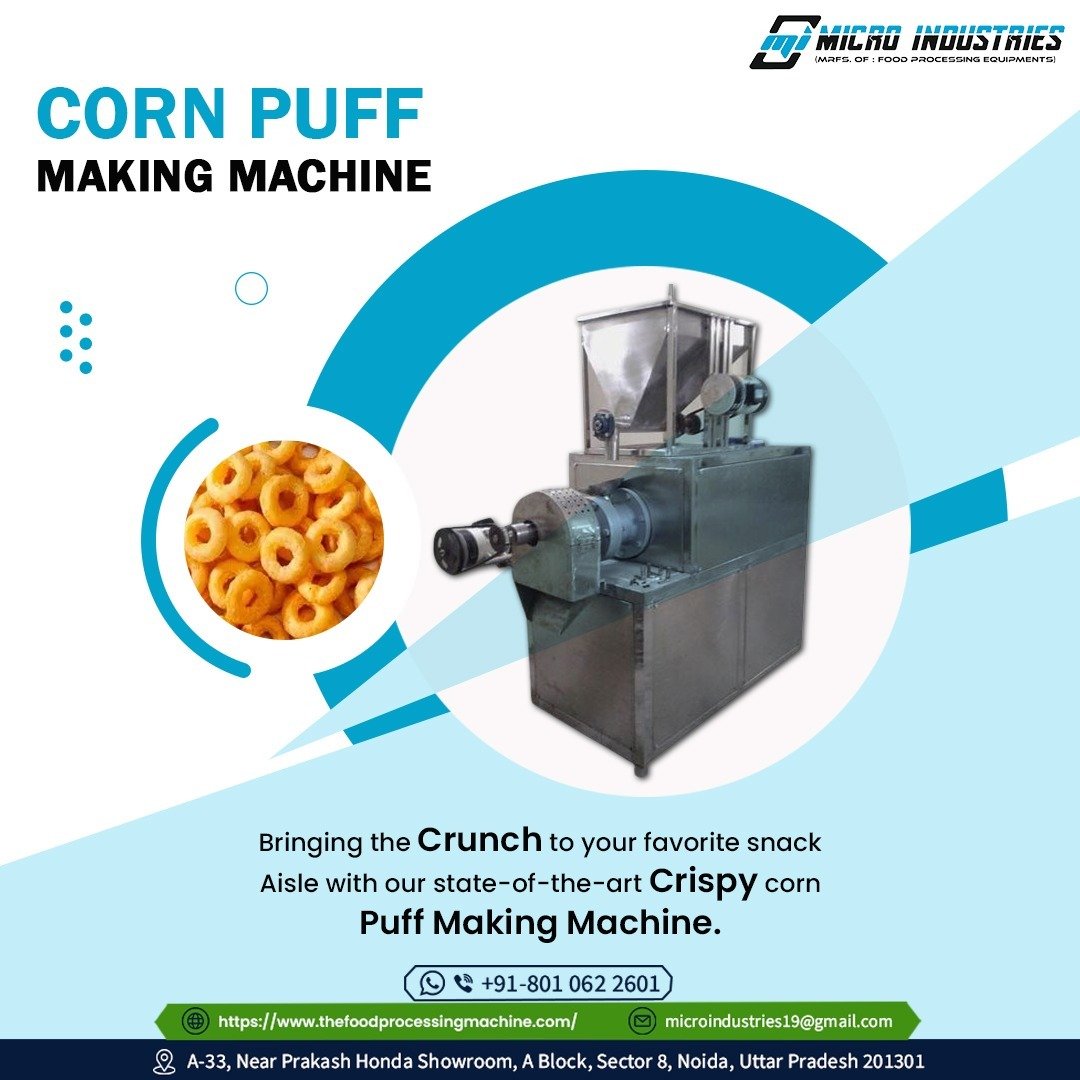
The Comprehensive Guide to Corn Puff Snacks Production: Micro-Industries in Noida & Delhi
The snack food industry in India is experiencing an unprecedented boom. Driven by shifting consumer preferences, urbanized lifestyles, and a growing demand for affordable “on-the-go” munchies, Corn Puff Snacks (often referred to as Kurkure-style or cheese balls) have emerged as one of the most profitable sectors for micro and small-scale entrepreneurs.
For those looking to establish a manufacturing unit in the Delhi-NCR region—specifically leveraging the industrial infrastructure of Noida—understanding the machinery, process, and local market dynamics is essential.
1. Why Corn Puff Snacks? The Market Potential
Corn puffs are “extruded” snacks. The extrusion process is highly efficient, turning raw corn grits into voluminous, crunchy snacks in seconds.
- Low Raw Material Cost: The primary ingredient is corn meal or grits, which are abundantly available and inexpensive in North India.
- High Scalability: You can start with a single manual line and scale to a fully automated plant.
- Versatility: One machine can produce various shapes (balls, rings, sticks, flowers, or stars) simply by changing the “die” (the nozzle).
- Shelf Life: With proper nitrogen-flushed packaging, these snacks stay fresh for 4–6 months.
2. The Core Machinery: How it Works
The heart of the operation is the Twin-Screw or Single-Screw Extruder. In the Delhi/Noida industrial belt, most micro-industries opt for a friction-based extruder that uses heat and pressure to “puff” the corn.
The Production Line Components:
- Mixer: Blends corn meal with water and optional spices to achieve the perfect moisture content (usually 18-20%).
- Screw Conveyor: Automatically feeds the moistened corn meal into the extruder.
- Extruder (The Main Machine): This is where the magic happens. The corn meal is subjected to high friction and pressure. As it exits the die, the sudden drop in pressure causes the steam to expand, creating the “puff.”
- Air Conveyor: Moves the hot puffs to the dryer.
- Dryer/Roaster: Removes excess moisture to ensure maximum crunch and longevity.
- Flavoring Drum (Seasoning Line): A rotating drum that sprays oil and dry seasoning (Masala, Cheese, Tomato) onto the puffs.
- Automatic Packaging Machine: A Form-Fill-Seal (FFS) machine that weighs the snacks, fills the pouches, and flushes them with Nitrogen to prevent oxidation.
3. Setup Costs and Requirements
For a micro-industry in Noida or Delhi, the financial layout is generally categorized into three tiers:
| Component | Micro-Scale (Manual) | Semi-Automatic | Fully Automatic |
| Capacity | 10–20 kg/hr | 50–100 kg/hr | 200+ kg/hr |
| Approx. Cost | ₹2.5 – ₹4 Lakhs | ₹7 – ₹12 Lakhs | ₹25 Lakhs+ |
| Space Required | 500 sq. ft. | 1,200 sq. ft. | 2,500 sq. ft. |
| Power Load | 7–10 HP | 20–30 HP | 50+ HP |
4. Establishing Your Unit in Noida & Delhi
The Noida (New Okhla Industrial Development Authority) region is a goldmine for food processing due to its structured industrial sectors and proximity to the massive consumer base of Delhi.
Key Locations for Sourcing & Setup:
- Machinery Sourcing: For high-quality extruders, entrepreneurs often look toward Okhla Industrial Estate (Delhi) or Sector 8, 10, and 58 in Noida. These hubs host numerous food-processing engineers and fabricators.
- Raw Materials: Khari Baoli (Old Delhi) is the primary hub for seasonings and spices, while corn grits are easily sourced from grain markets in Najafgarh or directly from suppliers in UP and Haryana.
Regulatory Checklist:
- FSSAI License: Mandatory for any food business.
- Udyam Registration: Essential for MSME benefits and subsidized loans.
- GST Registration: Required for inter-state trade and formal retail placement.
- Pollution NOC: Since extruders involve heat and smoke, a basic “Green” category clearance from the DPCC (Delhi) or UPPCB (Noida) is usually required.
5. Operational Tips for Success
To thrive in the competitive Delhi-NCR market, micro-industries must focus on Differentiation and Quality Control.
- The “Crunch” Factor: Ensure your dryer is calibrated correctly. If the moisture is too high, the snack will go “soggy” inside the packet within days.
- Regional Palates: In Delhi/Noida, spicy and tangy flavors (Chatpata, Tangy Tomato, Chilli Chatka) outperform plain cheese flavors.
- Packaging Design: The “look” of a ₹5 pack is often more important than the content. Invest in high-quality rotogravure printing for your pouches.
- Distribution: Don’t just aim for big supermarkets. The real volume in snacks lies in the Kirana stores (mom-and-pop shops) in densely populated areas like Laxmi Nagar, Rohini, or Noida’s urban villages.
6. Challenges and Mitigation
- Power Fluctuations: Noida and parts of Delhi can face voltage drops. Invest in a heavy-duty stabilizer or a backup generator to prevent the extruder from clogging during a power cut.
- Seasonality: Humidity during the Monsoon (July–September) can affect the raw corn meal. Use airtight silos for storage.
- Competition: Avoid “copying” major brands exactly. Create a unique shape or a localized flavor to build brand loyalty.
Conclusion
Starting a corn puff snack business in the Delhi-Noida corridor is a viable, high-growth venture for the modern entrepreneur. With a relatively low entry barrier and the support of Noida’s industrial ecosystem, a micro-industry can quickly evolve into a household name. By focusing on machine efficiency and localized flavoring, you can capture a slice of India’s multi-billion dollar savory snack market.